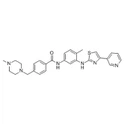
Bimatoprost, identified by the CAS number 155206-00-1, has gained significant attention in recent years, not only for its well - established use in ophthalmology but also for its potential effects on hair follicles. As a reliable supplier of Bimatoprost CAS 155206 - 00 - 1, I am excited to delve into the scientific mechanisms through which this compound impacts hair follicles.
Understanding Bimatoprost: A Brief Overview
Bimatoprost is a synthetic prostamide analog. Originally developed as a treatment for glaucoma and ocular hypertension, it is a prostaglandin F2α analog that works by increasing the outflow of aqueous humor from the eye, thereby reducing intraocular pressure. Its chemical structure allows it to interact with specific receptors in the body, leading to a range of physiological responses.
The Structure - Function Relationship of Bimatoprost
The chemical structure of Bimatoprost is crucial in understanding its interaction with hair follicles. It has a unique molecular architecture that enables it to bind to prostaglandin receptors, which are present on various cell types, including those in the hair follicles. The binding of Bimatoprost to these receptors activates a series of intracellular signaling pathways, leading to changes in the behavior of hair follicle cells.
Effects on Hair Follicle Growth Cycle
The hair growth cycle consists of three main phases: anagen (growth phase), catagen (transitional phase), and telogen (resting phase). Bimatoprost has been shown to have a profound impact on the anagen phase of the hair follicle. Studies suggest that it can extend the duration of the anagen phase, allowing hair follicles to produce longer and thicker hair shafts.
During the anagen phase, hair follicle cells are highly active, dividing rapidly to produce new hair. Bimatoprost may stimulate the proliferation of these cells by activating growth - related signaling pathways. For example, it can increase the expression of certain growth factors, such as vascular endothelial growth factor (VEGF), which promotes blood vessel formation around the hair follicles. Improved blood supply provides more nutrients and oxygen to the hair follicles, supporting their growth and development.
Influence on Hair Follicle Stem Cells
Hair follicle stem cells are essential for the continuous regeneration of hair. These cells reside in a specific region of the hair follicle called the bulge. Bimatoprost has been found to have an effect on hair follicle stem cells. It can activate these stem cells, causing them to differentiate into the various cell types required for hair growth.


By activating the stem cells, Bimatoprost can potentially reverse the miniaturization of hair follicles, which is a common characteristic in androgenetic alopecia. Miniaturized hair follicles produce thinner and shorter hair, eventually leading to hair loss. Bimatoprost may help to restore the normal size and function of these follicles, resulting in the growth of healthier hair.
Comparison with Related Compounds
When discussing Bimatoprost's effects on hair follicles, it is interesting to compare it with other related compounds. For instance, Latanoprost is another prostaglandin analog used in ophthalmology. While both Bimatoprost and Latanoprost are prostaglandin - related compounds, their effects on hair follicles may differ slightly.
Latanoprost For Reducing Ocular Hypertension is mainly known for its ability to lower intraocular pressure. However, some studies have also reported potential hair - related side effects in patients using Latanoprost. In comparison, Bimatoprost seems to have a more direct and pronounced effect on hair follicles, likely due to its specific binding affinity to certain prostaglandin receptors in the hair follicle cells.
The Role of Bimatoprost in Promoting Hair Pigmentation
In addition to its effects on hair growth, Bimatoprost may also play a role in hair pigmentation. Hair color is determined by the production of melanin, a pigment produced by melanocytes in the hair follicles. Bimatoprost may stimulate the activity of melanocytes, leading to an increase in melanin production.
This effect could be beneficial for individuals with gray or white hair, as it may help to restore some of the natural color. The exact mechanism by which Bimatoprost affects melanocytes is still being investigated, but it is likely related to its activation of intracellular signaling pathways that regulate melanin synthesis.
Safety and Side Effects
While Bimatoprost shows promise in promoting hair growth, it is important to consider its safety and potential side effects. When used topically for hair growth, the most common side effects include mild irritation, redness, or itching of the scalp. In some cases, users may also experience changes in iris color, although this is more commonly associated with its use in ophthalmology.
It is crucial to follow the recommended dosage and application instructions when using Bimatoprost for hair growth. As a supplier, we ensure that our Bimatoprost CAS 155206 - 00 - 1 meets the highest quality standards, minimizing the risk of side effects.
The Chemical Synthesis of Bimatoprost and Its Precursors
The synthesis of Bimatoprost involves several steps, and one of the important precursors is (-)-Corey Lactone Diol. This compound serves as a key building block in the chemical synthesis of Bimatoprost. The proper synthesis and purification of Bimatoprost are essential to ensure its quality and efficacy.
Market Demand and Future Prospects
The demand for Bimatoprost in the hair growth market is on the rise. With an increasing number of people looking for effective solutions to hair loss, Bimatoprost offers a potential alternative to traditional hair loss treatments. As a supplier, we are well - positioned to meet this growing demand.
In the future, further research is needed to fully understand the long - term effects of Bimatoprost on hair follicles and to develop more targeted and effective formulations. There is also a potential for Bimatoprost to be used in combination with other hair growth agents to enhance its efficacy.
Conclusion and Call to Action
In conclusion, Bimatoprost CAS 155206 - 00 - 1 has significant potential in promoting hair growth by affecting the hair follicle growth cycle, activating hair follicle stem cells, and influencing hair pigmentation. Its unique chemical structure and mode of action make it a promising candidate for the treatment of hair loss.
If you are interested in learning more about Bimatoprost CAS 155206 - 00 - 1 or are looking to procure high - quality Bimatoprost for your research or product development, please feel free to contact us. We are committed to providing you with the best products and services to meet your needs.
References
- Shapiro J, et al. Safety and efficacy of bimatoprost topical solution 0.03% in the treatment of androgenetic alopecia in men: a randomized, double - blind, placebo - controlled trial. Journal of the American Academy of Dermatology. 2012;66(3):455 - 463.
- Kang WH, et al. Prostaglandin analogs in hair growth: mechanisms and clinical applications. International Journal of Molecular Sciences. 2018;19(12):3967.
- Olsen EA, et al. A randomized, placebo - controlled, double - blind, parallel group study to evaluate the efficacy and safety of bimatoprost 0.03% topical solution in the treatment of female androgenetic alopecia. Journal of the American Academy of Dermatology. 2014;70(5):869 - 879.