Sales@medsciencepharm.com    +86-396-2967988
Cont

Have any Questions?

+86-396-2967988

Human Prostaglandins

First 12 Last1/2
Your Professional Human Prostaglandins Supplier


Our goal is to become your true partner in the field of human prostaglandins in China. Henan Medscience Pharmaceuticals Co., Ltd located in the industrial agglomerate of Zhumadian City, is a Hi-tech enterprise integrating R&D, production, and sales of human and veterinary APIs and Intermediates. We ensuring every product delivered meets rigorous quality and performance standards. The price is competitive and the product is quality-assured, which is a good choice for your long-term cooperation.


Latanoprost For Reducing Ocular Hypertension
Add to Inquiry
Latanoprost For Reducing Ocular Hypertension

Latanoprost is a prostaglandin analog used primarily to treat elevated intraocular pressure (IOP) in patients with open-angle glaucoma or ocular hypertension.
Intermediate Corey Lactone Diol
Add to Inquiry
Intermediate Corey Lactone Diol

Corey lactone diol, also referred to as Corey lactone diol synthesis or Corey lactone diol reagent, is a synthetic compound utilized in organic chemistry, especially in the synthesis of complex
(-)-Corey Lactone Diol Cyclic Compound
Add to Inquiry
(-)-Corey Lactone Diol Cyclic Compound

Corey lactone diol is a cyclic compound with a unique structure containing both a lactone ring and a hydroxyl group. Its molecular structure is designed to facilitate various synthetic
Latanoprost For Human Eye Drops
Add to Inquiry
Latanoprost For Human Eye Drops

Latanoprost is a medication primarily used to treat open-angle glaucoma and ocular hypertension. Glaucoma is a condition characterized by increased pressure within the eye, which can damage the optic
Prostaglandins Corey Lactone Diol For Human Use
Add to Inquiry
Prostaglandins Corey Lactone Diol For Human Use

Corey lactone diol, also known as the Corey lactone diol reagent, is a versatile synthetic reagent widely used in organic and pharmaceutical synthesis. Developed by American chemist Elias James
Latanoprost
Add to Inquiry
Latanoprost

CAS Number: 130209-82-4. Standard: In-House/IP/EP/BP standard. Latanoprost is a highly effective medication used to treat glaucoma and intraocular hypertension. .
Corey Lactone Benzoate
Add to Inquiry
Corey Lactone Benzoate

CAS Number: 39746-00-4. Standard: In-House/IP/EP/BP standard. Corey lactone benzoate is a useful intermediate in organic synthesis, commonly used in the preparation of pharmaceuticals and natural
(+)-Corey Lactone Diol
Add to Inquiry
(+)-Corey Lactone Diol

CAS Number: 76704-05-7. Standard: In-House/IP/EP/BP standard. (+)-Corey lactone diol is a useful and versatile building block in organic chemistry. .
(-)-Corey Lactone Diol
Add to Inquiry
(-)-Corey Lactone Diol

CAS Number: 32233-40-2. Standard: In-House/IP/EP/BP standard. (-)-Corey Lactone Diol is a versatile compound used in organic synthesis with high potential for drug discovery. .
Corey Lactone Diol CAS 76704-05-7
Add to Inquiry
Corey Lactone Diol CAS 76704-05-7

CAS Number: 76704-05-7. Standard: In-House Standard.
(-)-Corey Lactone Diol CAS 32233-40-2
Add to Inquiry
(-)-Corey Lactone Diol CAS 32233-40-2

CAS Number: 32233-40-2. Standard: In-House Standard.
(-)-Corey Lactone Benzoate CAS 39746-00-4
Add to Inquiry
(-)-Corey Lactone Benzoate CAS 39746-00-4

CAS Number: 39746-00-4. Standard: In-House Standard.
First 12 Last1/2
 
Why Choose Us


Production market

Henan Medscience's products are at the forefront of the domestic market. At the same time, the company's products are regularly exported to Europe, North America, South America, the Middle East and Asia, winning unanimous praise from domestic and foreign customers.


Customized service

In addition to existing products, we also provide customized products and new product R&D services according to customer needs.


Our R&D

Henan Medscience insists on driving high-level development with technological innovation, continuously increasing R&D investment, and establishing a R&D innovation system around human API and intermediate business.


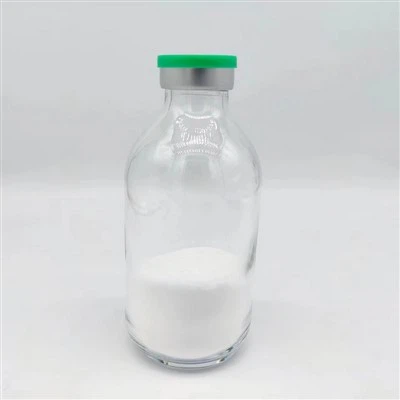
Latanoprost For Reducing Ocular Hypertension


Advantages of Human Prostaglandins

Prostaglandins are powerful, locally-acting vasodilators and inhibit the aggregation of blood platelets. Through their role in vasodilation, prostaglandins are also involved in inflammation. They are synthesized in the walls of blood vessels and serve the physiological function of preventing needless clot formation, as well as regulating the contraction of smooth muscle tissue.


Specification of Human Prostaglandins


Molar Mass

415.57

Density

1.145±0.06 g/cm3(Predicted)

Melting Point

66-68°C

Boling Point

629.8±55.0 °C(Predicted)

Flash Point

334.7°C

Solubility

Soluble in ethanol (~50 mg/ml), methanol, DMSO (~25 mg/ml), DMF (~25 mg/ml)

Vapor Presure

9.94E-17mmHg at 25°C

Appearance

Crystalline solid

Color

White to Off-White

pKa

14.25±0.20(Predicted)

Storage Condition

-20°C


Types of Human Prostaglandins


Type

Receptor

Receptor type

Function

PGI2

IP

Gs

Vasodilation

Inhibit platelet aggregation

Bronchodilation

PGD2

PTGDR (DP1) and CRTH2 (DP2)

GPCR

Produced by mast cells; recruits Th2 cells, eosinophils, and basophils

In mammalian organs, large amounts of PGD2 are found only in the brain and in mast cells

Critical to development of allergic diseases such as asthma

PGE2

EP1

Gq

Bronchoconstriction

GI tract smooth muscle contraction

Enhanced proliferation of T lymphocytes (Th1 sub-type)

EP2

Gs

Bronchodilation

GI tract smooth muscle relaxation

Vasodilation

Reduced intra-ocular pressure

Regulation of B cells, T cells (CD4 & CD8) & antigen presenting cell function

Pro-inflammatory cell development → inflammation & fever

Supression of NMDA receptor related neurotoxicity (only present within the central nervous system)

EP3

Gi

Uterus contraction (when pregnant)

GI tract smooth muscle contraction

Lipolysis inhibition

Inhibitory effect on thermogenic pre-optic hypothalamus

Stimulate nitrix oxide synthesis → PGE2 synthesis → pyogenic

↑ Mast cell release of histamine (increasing allergy response)

↑ Pain perception

Hyperalgesia (wild type EP3 expression)

↑ Autonomic neurotransmitters[20]

↑ Platelet response to their agonists[21] and ↑ atherothrombosis in vivo[22]

EP4

Gs

Hyperalgesia[20]

Pyrogenic

Supports regulatory T cell production

Stimulate dendritic cell maturation (antigen presenting cells of skin & mucosa)

Inhibit antibody B cell proliferation

↑ Inflammatory region blood flow (pyogenic & erythema)

Inhibitory effects of dorsal root ganglion (speculated reduction in allodynia & hyperalgesia)

↓ Gastric acid secretion

↑ Gastric mucus secretion

Prostate cancer (↑ EP4 expression)

↑ Corneal neovascularization

↑ Chohlea auditory brain stem response

PGF2α

FP

Gq

Uterus contraction

Bronchoconstriction

Urinary bladder contractions[23]

Vasoconstriction in cerebral circulation[24]


Composition of Human Prostaglandins

Prostaglandins are relatively simple, consisting of a 20-carbon fatty acid chain derived from arachidonic acid, an omega-6 fatty acid found in cell membranes. Prostaglandins are synthesized in the body through a series of enzymatic reactions that convert arachidonic acid into prostaglandin H2, which is then further metabolized into different types of prostaglandins.

(-)-Corey Lactone Diol Cyclic Compound


Application of Human Prostaglandins


Bimatoprost is usually used to treat glaucoma and ocular hypertension. It works by reducing intraocular pressure in the eye by increasing the outflow of aqueous humor from the eye. It is administered by topical ophthalmic solution and is often used in combination with other medications to reduce eye pressure. Bimatoprost is also used to treat certain types of hair loss, including hereditary thinning of the eyelashes (hypotrichosis). It works by increasing eyelash length, thickness, and darkness, and can be administered as a topical ophthalmic solution or as an eyelash serum.


Synthesis of Human Prostaglandins


productcate-553-230


Packing and Shipping of Human Prostaglandins


packing

Box/bag

Shipping

Shipped by road, sea, rail


FAQ


Q: What causes high production of prostaglandins?

A: High levels of prostaglandins are produced in response to injury or infection and cause inflammation, which is associated with the symptoms of redness, swelling, pain, and fever. This is an important part of the body's normal healing process.

Q: What is the richest source of prostaglandins?

A: Prostaglandins are found in a wide variety of tissues, but the seminal vesicles have the highest levels by far in humans. The seminal plasma contains 15 different prostaglandins at a concentration of 100–300 μg/ml.

Q: What food causes high prostaglandins?

A: Eating too many foods with Omega-6 fatty acids increases the production of pro-inflammatory prostaglandins. Foods high in Omega-6 fatty acids include red meat, dairy products, margarine, processed foods, and some vegetable oils (corn, soy, sunflower, safflower, grapeseed).

Q: What stimulates prostaglandins?

A: Synthesis of prostaglandins requires COX (cyclooxygenase) enzymes, including the constitutive COX-1 and the inducible COX-2 isoforms. COX-2 is induced in peripheral tissues by cytokines, growth factors, and other inflammatory stimuli,152 resulting in increased prostaglandin release.

Q: What are the signs of high prostaglandin?

A: Individuals may experience health problems if their prostaglandin level is too high or too low. Excessive prostaglandins may lead to painful periods and heavy menstrual bleeding, whereas low levels can contribute to stomach ulcers and glaucoma.

Q: What can prostaglandin do to your eyes?

A: Increased brown pigmentation in the iris of the treated eye. This is especially noticeable when the iris is mixed-coloured (blue-brown, grey-brown, yellow-brown, or green-brown). Increased pigmentation of peri-ocular skin. Darkening, thickening, and lengthening of the eyelashes.

Q: Can stress cause higher levels of prostaglandins?

A: Plasma levels of adrenocorticotrophic hormone (ACTH) and prostaglandin E2 were significantly higher 30 min after exposure to stress, in comparison to normal levels.

Q: What organ produces prostaglandins?

A: Prostaglandins are found in most tissues and organs. They are produced by almost all nucleated cells. They are autocrine and paracrine lipid mediators that act upon platelets, endothelium, uterine and mast cells. They are synthesized in the cell from the fatty acid arachidonic acid.

We're professional human prostaglandins manufacturers and suppliers in China, specialized in providing high quality human and veterinary APIs and intermediates. We warmly welcome you to buy high-grade human prostaglandins from our factory.

reliable human prostaglandins source, human prostaglandins for personalized medicine, human prostaglandins manufacturing

(0/10)

clearall