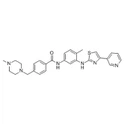
Pradofloxacin, identified by the CAS number 195532-12-8, is a pivotal veterinary fluoroquinolone antibiotic. As a reliable supplier of Pradofloxacin, I understand the significance of in - depth analysis for both researchers and end - users. In this blog, I'll share comprehensive methods and key aspects for analyzing the content of Pradofloxacin.
1. Understanding the Chemical Structure
Pradofloxacin belongs to the fluoroquinolone class of antibiotics. Its chemical structure consists of a quinolone core with specific functional groups attached. The presence of fluorine atoms in the structure enhances its antibacterial activity and pharmacokinetic properties. By analyzing the chemical structure, we can predict its reactivity, solubility, and potential interactions with biological targets.
The structural formula of Pradofloxacin provides insights into its stability and how it might behave under different environmental conditions. For example, the acidic or basic functional groups can influence its solubility in various solvents. Understanding the structure is the first step in any content analysis, as it forms the basis for subsequent physical and chemical property investigations.
2. Physical and Chemical Property Analysis
Solubility
Solubility is a crucial physical property. Pradofloxacin's solubility in water and organic solvents can be determined through experimental methods. A solubility test involves adding a known amount of Pradofloxacin to a specific volume of solvent and observing the dissolution process. This information is vital for formulating the drug into different dosage forms, such as tablets, suspensions, or injectables.
Melting Point
The melting point of Pradofloxacin can be measured using a melting point apparatus. A pure sample of Pradofloxacin will have a narrow melting point range. Deviations from the expected melting point can indicate impurities or polymorphic forms. Polymorphism, where a compound exists in different crystal structures, can affect the drug's bioavailability and stability.
pH - Dependence
Pradofloxacin's behavior in different pH environments is also important. It may exist in different ionic forms depending on the pH of the solution. This can impact its solubility, stability, and interaction with biological membranes. For example, in an acidic environment, certain functional groups may be protonated, while in a basic environment, they may be deprotonated.
3. Purity Analysis
High - Performance Liquid Chromatography (HPLC)
HPLC is a widely used technique for analyzing the purity of Pradofloxacin. It separates the components of a sample based on their interaction with a stationary phase and a mobile phase. By injecting a Pradofloxacin sample into the HPLC system, we can detect and quantify impurities. The retention time of Pradofloxacin and its impurities on the chromatogram provides information about their chemical nature.


The area under the peak corresponding to Pradofloxacin on the HPLC chromatogram is proportional to its concentration. Comparing this area with the areas of impurity peaks allows us to calculate the purity of the sample. HPLC can also be used to monitor the stability of Pradofloxacin over time, as any degradation products will appear as additional peaks on the chromatogram.
Mass Spectrometry (MS)
MS can be coupled with HPLC (HPLC - MS) for more accurate identification of Pradofloxacin and its impurities. Mass spectrometry measures the mass - to - charge ratio of ions. By analyzing the mass spectra of Pradofloxacin and its potential impurities, we can determine their molecular weights and chemical structures. This is especially useful for identifying unknown impurities, which may have a significant impact on the safety and efficacy of the drug.
4. Spectroscopic Analysis
Infrared Spectroscopy (IR)
IR spectroscopy is used to identify the functional groups present in Pradofloxacin. Different functional groups absorb infrared radiation at specific wavelengths. By analyzing the IR spectrum of Pradofloxacin, we can confirm the presence of groups such as carbonyl, hydroxyl, and amino groups. This information is consistent with the chemical structure we deduced earlier and can also be used to detect any changes in the functional groups due to degradation or impurities.
Nuclear Magnetic Resonance (NMR)
NMR spectroscopy provides detailed information about the molecular structure of Pradofloxacin. It can be used to determine the connectivity of atoms, the stereochemistry, and the presence of different chemical environments within the molecule. ¹H - NMR and ¹³C - NMR are commonly used techniques. The chemical shifts, coupling constants, and integration values in the NMR spectra can be used to verify the structure of Pradofloxacin and detect any structural isomers or impurities.
5. Biological Activity Analysis
Antibacterial Assays
As an antibiotic, Pradofloxacin's primary function is to inhibit the growth of bacteria. Antibacterial assays, such as the minimum inhibitory concentration (MIC) test, can be used to evaluate its antibacterial activity. In the MIC test, different concentrations of Pradofloxacin are added to bacterial cultures, and the lowest concentration that inhibits visible growth is determined. This provides information about the potency of Pradofloxacin against different bacterial strains.
Mechanism of Action Studies
Understanding the mechanism of action of Pradofloxacin is also important. It is known to target bacterial DNA gyrase and topoisomerase IV, enzymes involved in DNA replication and repair. By studying the interaction between Pradofloxacin and these enzymes, we can gain insights into its antibacterial mechanism and potential resistance mechanisms.
Related Products
If you are interested in other veterinary APIs, we also offer API Trilostane Pharmaceutical Powder, Altrenogest CAS 850 - 52 - 2, and Flugestone Acetate 2529 - 45 - 5. These products are also essential in the veterinary field and can meet different needs.
Conclusion
Analyzing the content of Pradofloxacin involves a multi - faceted approach, including understanding its chemical structure, physical and chemical properties, purity, spectroscopic characteristics, and biological activity. As a supplier of Pradofloxacin, we are committed to providing high - quality products and supporting our customers with in - depth analysis and technical assistance.
If you are interested in purchasing Pradofloxacin or have any questions about its analysis or application, please feel free to contact us for further discussion and negotiation. We look forward to establishing a long - term and mutually beneficial cooperation with you.
References
- "Fluoroquinolone Antibiotics: Chemistry, Mode of Action, and Resistance" - A comprehensive review on the chemistry and mechanism of fluoroquinolones.
- "High - Performance Liquid Chromatography: Principles and Practice" - A textbook on the principles and applications of HPLC in pharmaceutical analysis.
- "Spectroscopic Methods in Organic Chemistry" - A resource for understanding the use of IR, NMR, and MS in chemical structure determination.