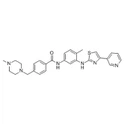
Limaprost, with the CAS number 74397 - 12 - 9, is a synthetic prostaglandin E1 (PGE1) derivative that has gained significant attention in the medical and pharmacological fields. As a reliable supplier of Limaprost CAS 74397 - 12 - 9, I am deeply involved in understanding its properties and effects. In this blog, we will explore the effects of Limaprost on smooth muscle contraction, which is crucial for various physiological and pathological processes.


1. Introduction to Smooth Muscle and Its Contraction
Smooth muscle is a type of non - striated muscle found in the walls of hollow organs such as the gastrointestinal tract, blood vessels, urinary bladder, and reproductive organs. Its contraction is involuntary and plays a vital role in many physiological functions, including peristalsis in the gut, regulation of blood pressure, and urine storage and voiding.
The contraction of smooth muscle is regulated by a complex interplay of intracellular calcium ions, contractile proteins (such as actin and myosin), and various signaling pathways. When calcium ions bind to calmodulin, it activates myosin light - chain kinase (MLCK), which phosphorylates myosin light chains, leading to cross - bridge formation between actin and myosin and subsequent muscle contraction.
2. Mechanism of Action of Limaprost
Limaprost exerts its effects by binding to prostaglandin E receptors (EP receptors). There are four subtypes of EP receptors (EP1, EP2, EP3, and EP4), each with different tissue distributions and functions. Limaprost has a relatively high affinity for EP2 and EP4 receptors, which are coupled to the activation of adenylate cyclase and the subsequent increase in intracellular cyclic adenosine monophosphate (cAMP) levels.
An increase in cAMP activates protein kinase A (PKA), which can phosphorylate various target proteins involved in smooth muscle contraction. PKA can phosphorylate MLCK, reducing its activity and thus inhibiting myosin light - chain phosphorylation. Additionally, PKA can also phosphorylate other proteins that regulate calcium handling, such as calcium channels and sarcoplasmic reticulum proteins, leading to a decrease in intracellular calcium levels.
3. Effects of Limaprost on Smooth Muscle Contraction in Different Organs
3.1. Blood Vessels
In blood vessels, smooth muscle contraction is a major determinant of vascular tone and blood pressure. Limaprost has been shown to cause vasodilation by relaxing the smooth muscle in the vessel walls. By binding to EP2 and EP4 receptors on vascular smooth muscle cells, Limaprost increases cAMP levels, which in turn inhibits the contractile machinery. This vasodilatory effect can improve blood flow in various tissues, especially in ischemic areas.
For example, in patients with peripheral arterial disease, Limaprost can enhance blood circulation in the lower extremities, relieving symptoms such as intermittent claudication. It has also been investigated for its potential use in the treatment of pulmonary hypertension, as it may reduce pulmonary vascular resistance by relaxing the smooth muscle in the pulmonary arteries.
3.2. Gastrointestinal Tract
In the gastrointestinal tract, smooth muscle contraction is responsible for peristalsis, which propels food through the digestive system. Limaprost may have a dual effect on gastrointestinal smooth muscle. In some cases, it can inhibit excessive smooth muscle contraction, which is beneficial in conditions such as irritable bowel syndrome with diarrhea. By reducing the over - activity of smooth muscle, it can relieve abdominal pain and diarrhea.
On the other hand, in some situations where there is a lack of proper peristalsis, Limaprost may also have a positive effect. It can modulate the normal rhythmic contractions of the gut smooth muscle, improving the overall motility of the digestive tract.
3.3. Urinary Bladder
In the urinary bladder, smooth muscle contraction is essential for urine storage and voiding. Limaprost can relax the smooth muscle of the bladder detrusor, which may be useful in the treatment of overactive bladder syndrome. By reducing the involuntary contractions of the detrusor muscle, it can increase the bladder's storage capacity and reduce the frequency of urination.
4. Comparison with Other Prostaglandins
When comparing Limaprost with other prostaglandins, such as Latanoprost (Latanoprost CAS 130209 - 82 - 4), their effects on smooth muscle contraction can vary significantly. Latanoprost is a prostaglandin F2α analogue mainly used for the treatment of glaucoma. It acts on the trabecular meshwork and ciliary muscle in the eye, increasing the outflow of aqueous humor and reducing intraocular pressure.
In contrast, Limaprost, as a PGE1 derivative, has a broader range of effects on smooth muscle in different organs due to its affinity for EP2 and EP4 receptors. While Latanoprost's main target is the eye, Limaprost can affect blood vessels, the gastrointestinal tract, and the urinary bladder, among other organs.
Another prostaglandin - related compound is (-)-Corey Lactone Benzoate CAS 39746 - 00 - 4, which is an important intermediate in the synthesis of prostaglandins. Although it is not a bioactive prostaglandin itself, it is crucial in the production of various prostaglandin - based drugs, including Limaprost.
5. Clinical Significance of Limaprost's Effects on Smooth Muscle Contraction
The effects of Limaprost on smooth muscle contraction have significant clinical implications. In the treatment of peripheral arterial disease, its vasodilatory effect can improve blood supply to the affected limbs, reducing pain and improving the patient's quality of life. In the management of overactive bladder syndrome, its ability to relax the bladder smooth muscle can provide relief from urinary symptoms.
In addition, Limaprost may also have potential applications in other conditions related to abnormal smooth muscle contraction, such as Raynaud's disease and some forms of erectile dysfunction. However, further research is needed to fully explore these potential uses.
6. Conclusion and Call to Action
In conclusion, Limaprost (CAS 74397 - 12 - 9) has diverse effects on smooth muscle contraction through its interaction with EP receptors and the subsequent modulation of intracellular signaling pathways. Its ability to relax smooth muscle in different organs makes it a promising therapeutic agent for a variety of diseases.
As a supplier of Limaprost CAS 74397 - 12 - 9, we are committed to providing high - quality products to support further research and clinical applications. If you are interested in purchasing Limaprost for research or other purposes, please feel free to contact us for more information and to start a procurement negotiation.
References
- Smith JB, DeWitt DL, Garavito RM. Cyclooxygenases: structural, cellular, and molecular biology. Annu Rev Biochem. 2000;69:145 - 182.
- Narumiya S, Sugimoto Y, Ushikubi F. Prostanoid receptors: structures, properties, and functions. Physiol Rev. 1999;79(4):1193 - 1226.
- Ignarro LJ. Nitric oxide as a signaling molecule in the vascular system: an overview. J Cardiovasc Pharmacol. 1990;16 Suppl 8:S19 - 26.