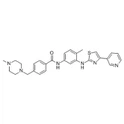
Pradofloxacin (CAS 195532-12-8) is a synthetic fluoroquinolone antibiotic that has gained significant attention in the field of veterinary medicine. As a supplier of Pradofloxacin CAS 195532-12-8, I am well - versed in its various aspects, especially its pharmacokinetic properties. In this blog, I will delve into the key pharmacokinetic characteristics of Pradofloxacin, exploring how it is absorbed, distributed, metabolized, and excreted in the body.
Absorption
The absorption of Pradofloxacin is a crucial initial step in its pharmacokinetic journey. After oral administration, Pradofloxacin is rapidly and well - absorbed from the gastrointestinal tract in animals. The high bioavailability of Pradofloxacin is one of its notable features. Studies have shown that in dogs and cats, the bioavailability can reach up to approximately 90%. This high bioavailability means that a large proportion of the administered dose enters the systemic circulation, allowing for effective drug concentrations to be achieved quickly.
The rate of absorption is also relatively fast. Peak plasma concentrations are typically reached within 1 - 2 hours after oral dosing. This rapid absorption is beneficial in treating infections as it enables the drug to start exerting its antibacterial effects promptly. Factors such as the presence of food in the stomach can have a minor impact on the absorption of Pradofloxacin. While it can be administered with or without food, administration on an empty stomach may lead to slightly faster absorption. However, the overall bioavailability remains high regardless of food intake, providing flexibility in dosing regimens for veterinarians.
Distribution
Once Pradofloxacin enters the systemic circulation, it is distributed throughout the body. It has a relatively large volume of distribution, which indicates that it can penetrate well into various tissues and body fluids. This extensive distribution is an advantage in treating infections in different anatomical locations.
Pradofloxacin has a high affinity for tissues, especially those with a high metabolic rate such as the respiratory and urinary tracts. It can achieve therapeutic concentrations in these target tissues, effectively combating bacterial infections. In addition, it can cross the blood - brain barrier to a certain extent, although the concentration in the cerebrospinal fluid is lower compared to plasma. This limited penetration into the central nervous system is important as it reduces the risk of potential neurological side effects while still allowing for treatment of some infections in the head and neck region.
The binding of Pradofloxacin to plasma proteins is moderate. Approximately 30 - 40% of the drug is bound to plasma proteins. This level of protein binding allows for a balance between the free (active) and bound forms of the drug. The free form of Pradofloxacin is available to interact with bacterial targets, while the bound form serves as a reservoir, gradually releasing the drug into the circulation as the free drug is metabolized or excreted.
Metabolism
Pradofloxacin undergoes relatively minor metabolism in the body. The main metabolic pathway involves oxidation and conjugation reactions. These metabolic processes occur primarily in the liver. However, a large proportion of the administered dose remains in its active form.
The metabolites of Pradofloxacin are generally less active than the parent drug. This means that the antibacterial activity of Pradofloxacin is mainly attributed to the unchanged drug. The limited metabolism is an advantage as it reduces the potential for drug - drug interactions and the formation of toxic metabolites. It also allows for a more predictable pharmacokinetic profile, making it easier for veterinarians to determine appropriate dosing regimens.
Excretion
The excretion of Pradofloxacin occurs mainly through the kidneys and to a lesser extent through the bile. Renal excretion is the predominant route, with approximately 60 - 70% of the administered dose being excreted unchanged in the urine. This high renal excretion rate is beneficial in treating urinary tract infections as it ensures high drug concentrations in the urine, which can effectively target bacteria in this location.
The elimination half - life of Pradofloxacin is relatively long, ranging from 4 - 6 hours in dogs and cats. This long half - life allows for less frequent dosing, which is convenient for both veterinarians and pet owners. It also helps to maintain therapeutic drug concentrations in the body over an extended period, enhancing the effectiveness of treatment.
Comparison with Other Veterinary Drugs
When comparing Pradofloxacin with other veterinary antibiotics, its pharmacokinetic properties stand out. For example, compared to some older generation antibiotics, Pradofloxacin has a higher bioavailability, faster absorption, and better tissue penetration. This makes it more effective in treating a wider range of infections.
Let's take a look at some other veterinary drugs available in the market. Dimevamide 60 - 46 - 8 is a compound used in veterinary medicine. While it has its own set of pharmacological properties, Pradofloxacin's superior pharmacokinetic profile gives it an edge in terms of antibacterial efficacy. Similarly, Dexmedetomidine Hydrochloride for Veterinary CAS 145108 - 58 - 3 is mainly used for sedation and analgesia in animals. Pradofloxacin, on the other hand, is focused on antibacterial treatment, and its unique pharmacokinetic characteristics make it a valuable option for veterinarians. API Neostigmine Methyl Sulfate Cholinesterase Inhibitor has a different mechanism of action and pharmacokinetic profile compared to Pradofloxacin, highlighting the diversity of drugs available for veterinary use.
Clinical Significance of Pharmacokinetic Properties
The pharmacokinetic properties of Pradofloxacin have significant clinical implications. The rapid absorption and high bioavailability ensure that effective drug concentrations are achieved quickly, which is crucial in the early stages of infection treatment. The extensive tissue distribution allows for the treatment of infections in multiple body sites, including deep - seated infections.
The long elimination half - life and high renal excretion rate contribute to the convenience of dosing and the effectiveness in treating urinary tract infections. Veterinarians can design dosing regimens based on these pharmacokinetic parameters to optimize treatment outcomes. For example, for severe infections, a loading dose may be administered initially to achieve therapeutic concentrations rapidly, followed by a maintenance dose based on the drug's half - life.


Conclusion
In conclusion, the pharmacokinetic properties of Pradofloxacin (CAS 195532 - 12 - 8) make it a highly effective and valuable antibiotic in veterinary medicine. Its rapid and high - level absorption, extensive tissue distribution, limited metabolism, and efficient excretion contribute to its therapeutic success. As a supplier of Pradofloxacin, I understand the importance of these properties in ensuring the quality and effectiveness of the drug.
If you are a veterinarian, a pharmaceutical manufacturer, or involved in the veterinary industry and are interested in Pradofloxacin, I invite you to contact me for procurement and further discussions. We can work together to meet your specific needs and ensure the best possible treatment for animals.
References
- Papich MG. Pharmacokinetics and pharmacodynamics of antimicrobials in veterinary medicine. Wiley - Blackwell; 2011.
- Boothe DM. Small animal clinical pharmacology and therapeutics. Elsevier; 2018.
- Literature on Pradofloxacin from scientific research journals in the field of veterinary pharmacology.