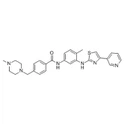
Altrenogest, identified by the CAS number 850 - 52 - 2, is a synthetic progestin that has found significant applications in veterinary medicine, particularly in the synchronization of estrus in livestock. As a supplier of Altrenogest with CAS 850 - 52 - 2, I am excited to delve into the chemical structure of this compound, exploring its composition, properties, and implications for its function.
Chemical Structure Basics
The chemical structure of Altrenogest is based on the steroid nucleus, which is a characteristic feature of many hormones in the body. Steroids are composed of four fused rings: three cyclohexane rings (A, B, and C) and one cyclopentane ring (D). This basic structure is known as the cyclopentanoperhydrophenanthrene nucleus.
Altrenogest belongs to the class of 19 - nor - progesterone derivatives. The "19 - nor" designation indicates that the methyl group at the 19th carbon position of the steroid nucleus has been removed. This modification has significant effects on the biological activity and pharmacokinetic properties of the compound.
Detailed Chemical Structure Analysis
The molecular formula of Altrenogest is C₂₁H₂₆O₂, and its molecular weight is approximately 310.43 g/mol. The structure of Altrenogest can be described in terms of its functional groups and the arrangement of atoms within the steroid nucleus.
- Ring Structure: The four - ring steroid nucleus provides a rigid and stable framework for the molecule. The A, B, C, and D rings are fused in a specific conformation that influences the overall shape and reactivity of the compound. The stereochemistry of the ring junctions is crucial for the biological activity of Altrenogest. For example, the trans - junction between the A and B rings and the cis - junction between the C and D rings are characteristic features of many biologically active steroids.
- Double Bonds: Altrenogest contains several double bonds within the steroid nucleus. There is a double bond between carbons 4 and 5 in the A ring, which is a common feature in many progestins. This double bond contributes to the planar structure of the A ring and affects the binding of the molecule to its receptor. Additionally, there is a double bond between carbons 17 and 20 in the side - chain attached to the D ring. This double bond is important for the interaction of Altrenogest with the progesterone receptor.
- Functional Groups: The molecule has a ketone group (C = O) at the 3rd carbon position in the A ring. This ketone group is involved in hydrogen bonding and other intermolecular interactions, which are important for the binding of Altrenogest to its receptor. At the 17th carbon position, there is an ethynyl group (- C≡CH). The presence of the ethynyl group at this position enhances the progestogenic activity of the compound by increasing its affinity for the progesterone receptor.
Implications of the Chemical Structure for Biological Activity
The chemical structure of Altrenogest is directly related to its biological activity as a progestin. Progestins are hormones that mimic the effects of progesterone, a natural hormone involved in the regulation of the female reproductive cycle.
- Receptor Binding: The specific arrangement of functional groups and the overall shape of the Altrenogest molecule allow it to bind to the progesterone receptor with high affinity. The ketone group at the 3rd carbon, the double bonds in the A and D rings, and the ethynyl group at the 17th carbon all contribute to the binding interactions with the receptor. Once bound to the receptor, Altrenogest activates a series of intracellular signaling pathways that lead to the physiological effects associated with progesterone.
- Biological Effects: Altrenogest exerts its biological effects by binding to the progesterone receptor in target tissues, such as the uterus and the mammary glands. In livestock, Altrenogest is used to synchronize the estrus cycle, which is beneficial for artificial insemination and breeding management. By maintaining high levels of progestin in the body, Altrenogest suppresses the release of gonadotropins from the pituitary gland, thereby preventing ovulation. When the administration of Altrenogest is stopped, the levels of progestin decrease, and the normal estrus cycle resumes, resulting in a synchronized ovulation among the treated animals.
Comparison with Other Related Compounds
Altrenogest can be compared with other progestins and related compounds to understand its unique properties. For example, compared to natural progesterone, Altrenogest has a longer half - life and greater oral bioavailability. This is due in part to the modifications in its chemical structure, such as the removal of the 19th methyl group and the presence of the ethynyl group at the 17th carbon.
Other 19 - nor - progesterone derivatives, such as norethindrone and norgestrel, also have similar chemical structures and biological activities. However, each compound has its own unique profile of biological effects and pharmacokinetic properties, which are determined by the specific arrangement of functional groups and the stereochemistry of the molecule.
Our Offerings as a Supplier
As a supplier of Altrenogest with CAS 850 - 52 - 2, we are committed to providing high - quality products that meet the strictest industry standards. Our Altrenogest is synthesized using advanced chemical processes and undergoes rigorous quality control measures to ensure its purity, potency, and safety.
In addition to Altrenogest, we also offer a range of other veterinary APIs, such as Neostigmine MethylSulfate For Animals, Pharmaceutical Compound Denaverine HCL, and Trilostane API. These products are designed to meet the diverse needs of the veterinary industry and are backed by our expertise and commitment to quality.


Conclusion
In conclusion, the chemical structure of Altrenogest with CAS 850 - 52 - 2 is a complex and fascinating topic that has significant implications for its biological activity and applications in veterinary medicine. The 19 - nor - progesterone derivative structure, with its specific functional groups and double bonds, confers unique properties to Altrenogest, making it an effective progestin for estrus synchronization in livestock.
If you are interested in purchasing Altrenogest or any of our other veterinary APIs, we invite you to contact us for more information and to discuss your specific requirements. We look forward to the opportunity to work with you and to provide you with the highest quality products and services.
References
- Goodman, L. S., & Gilman, A. (Eds.). (2006). Goodman and Gilman's The Pharmacological Basis of Therapeutics. McGraw - Hill.
- Wilson, J. D., & Foster, D. W. (Eds.). (1992). Williams Textbook of Endocrinology. Saunders.
- Ebling, F. J. P. (1994). Reproductive Endocrinology in Farm Animals. CAB International.