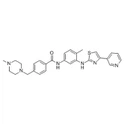
Flumethrin, identified by the CAS number 69770 - 45 - 2, is a well - known synthetic pyrethroid insecticide and acaricide that has gained significant attention in the field of veterinary medicine and pest control. As a reliable supplier of Flumethrin with CAS 69770 - 45 - 2, I am delighted to delve into the chemical structure of this compound and share its significance.
Chemical Structure of Flumethrin
The chemical formula of Flumethrin is (C_{28}H_{22}Cl_{2}FNO_{3}). Its structure is characterized by a complex arrangement of various functional groups and atoms, which contribute to its unique properties and biological activities.
At the core of the Flumethrin structure, there is a cyclopropane ring, a common feature in many pyrethroid compounds. This cyclopropane ring is part of the chrysanthemic acid moiety, which is an important structural component of pyrethroids. The chrysanthemic acid part is esterified with an alcohol group, forming an ester linkage. This ester bond is crucial for the biological activity of Flumethrin, as it can be hydrolyzed under certain conditions, leading to the deactivation of the compound.
One of the most distinctive features of Flumethrin is the presence of fluorine atoms. Fluorine is a highly electronegative element, and its incorporation into the structure can significantly affect the physical and chemical properties of the compound. In Flumethrin, the fluorine atoms are attached to specific positions on the aromatic rings. The fluorination enhances the lipophilicity of the molecule, allowing it to penetrate the cuticle of insects and mites more effectively. This increased lipophilicity also contributes to the stability of the compound, making it more resistant to degradation in the environment.
The aromatic rings in Flumethrin are substituted with chlorine atoms. Chlorine substitution can further modify the electronic properties of the molecule, influencing its interaction with target receptors in insects and mites. The combination of fluorine and chlorine atoms on the aromatic rings gives Flumethrin its potent insecticidal and acaricidal activity.
Another important part of the Flumethrin structure is the nitrile group ((-C\equiv N)). The nitrile group is known to play a role in the mode of action of Flumethrin. It can interact with specific enzymes or receptors in the nervous system of pests, disrupting normal nerve function and ultimately leading to paralysis and death.
Biological Activity and Mode of Action
Flumethrin acts primarily on the nervous system of insects and mites. It targets the voltage - gated sodium channels, which are essential for the generation and propagation of nerve impulses. When Flumethrin binds to these sodium channels, it causes them to remain open for an extended period, leading to a continuous influx of sodium ions into the nerve cells. This results in over - excitation of the nervous system, followed by paralysis and death of the pests.
The unique chemical structure of Flumethrin, with its fluorine, chlorine, and nitrile groups, enhances its affinity for the sodium channels in pests. The lipophilic nature of the molecule allows it to cross the cell membranes easily and reach the target sites within the nervous system.


Applications in Veterinary Medicine
In veterinary medicine, Flumethrin is widely used for the control of external parasites in livestock and pets. It is effective against a variety of pests, including ticks, mites, and lice. For example, in cattle and sheep, Flumethrin - based products can be used as pour - on formulations to protect animals from tick infestations. Ticks can transmit various diseases, such as babesiosis and anaplasmosis, which can have a significant impact on the health and productivity of livestock. By using Flumethrin, farmers can reduce the risk of these diseases and improve the overall well - being of their animals.
In the case of pets, Flumethrin - containing collars are commonly used to protect dogs and cats from fleas and ticks. These collars release a low - level of Flumethrin over an extended period, providing long - lasting protection against external parasites.
Comparison with Other Veterinary APIs
When comparing Flumethrin with other veterinary active pharmaceutical ingredients (APIs), such as Altrenogest Vet and Neostigmine Methyl Sulfate Vet, we can see distinct differences in their chemical structures and modes of action.
Altrenogest, with the CAS number 850 - 52 - 2, is a synthetic progestogen. Its chemical structure is based on the steroid nucleus, which is quite different from the pyrethroid structure of Flumethrin. Altrenogest is mainly used in veterinary medicine for the synchronization of estrus in livestock. It acts on the reproductive system by binding to progesterone receptors, regulating the hormonal balance in animals. You can learn more about API Altrenogest CAS 850 - 52 - 2 on our website.
Neostigmine Methyl Sulfate is a cholinesterase inhibitor. Its structure contains a quaternary ammonium group and a carbamate moiety. It acts by inhibiting the enzyme acetylcholinesterase, which is responsible for the breakdown of acetylcholine in the nervous system. This leads to an accumulation of acetylcholine, resulting in enhanced cholinergic activity. In contrast, Flumethrin acts on the voltage - gated sodium channels in the nervous system, with a completely different mechanism of action.
Quality and Supply of Flumethrin
As a supplier of Flumethrin with CAS 69770 - 45 - 2, we are committed to providing high - quality products. Our Flumethrin is manufactured using advanced production processes and strict quality control measures. We ensure that the chemical structure of our Flumethrin is consistent with the established standards, and the product has high purity and stability.
We have a reliable supply chain that allows us to meet the diverse needs of our customers. Whether you are a large - scale livestock farmer or a pet product manufacturer, we can provide you with the appropriate quantity of Flumethrin. Our technical support team is also available to offer advice on the use and application of Flumethrin, ensuring that you can achieve the best results in pest control.
Contact for Purchase and Collaboration
If you are interested in purchasing Flumethrin with CAS 69770 - 45 - 2 or have any questions about its application, please feel free to contact us. We are eager to start a business relationship with you and provide you with the best solutions for your pest control needs. Our team is ready to discuss the details of your requirements and offer competitive prices and excellent service.
References
- Casida, J. E., & Quistad, G. B. (1998). Pyrethroid toxicology: mechanisms of selective toxicity. Annual Review of Pharmacology and Toxicology, 38(1), 321 - 342.
- Ware, G. W., & Whitacre, D. M. (2004). The pesticide book. Thomson Publications.
- Soderlund, D. M., Bloomquist, J. R., Narahashi, T., & Casida, J. E. (2002). Mechanisms of pyrethroid neurotoxicity: implications for cumulative risk assessment. Environmental Health Perspectives, 110(Suppl 3), 425 - 433.