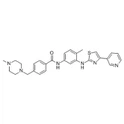
Hey there! I'm a supplier of Pimobendan CAS 74150 - 27 - 9. Today, I'm gonna dig into the question: Who discovered Pimobendan CAS 74150 - 27 - 9?
Let's start with a bit of background on Pimobendan. It's a pretty important drug in the veterinary world. It's used to treat heart failure in dogs, specifically those with dilated cardiomyopathy and mitral valve disease. It works by enhancing the contractility of the heart muscle and also causing vasodilation, which helps the heart pump blood more effectively.
Now, onto the discovery. Pimobendan was discovered by a team of researchers at Hoechst AG, which is now part of Sanofi. In the 1980s, scientists were on the hunt for new drugs that could improve cardiac function. The team at Hoechst was working on a class of compounds known as inodilators. These are drugs that have both inotropic (strengthening the heart's contraction) and vasodilatory (widening blood vessels) effects.
The discovery process was no walk in the park. It involved a lot of trial and error, testing different chemical structures to see which ones had the desired effects on the heart. After countless experiments, they hit upon Pimobendan. It showed great promise in pre - clinical studies, demonstrating significant improvements in cardiac function without causing too many side effects.
In 1993, Pimobendan was first approved for use in Japan under the brand name Vetmedin. Later, it also got approval in other countries, becoming a go - to treatment for heart conditions in dogs.
One of the reasons Pimobendan was such a breakthrough is that it offered a new approach to treating heart failure. Before its discovery, traditional treatments mainly focused on either strengthening the heart's contraction or dilating blood vessels, but not both at the same time. Pimobendan's dual action made it a more effective treatment option.
Now, as a supplier of Pimobendan CAS 74150 - 27 - 9, I know how important it is to have a high - quality product. We source our Pimobendan from reliable manufacturers who follow strict quality control standards. This ensures that the Pimobendan we supply is pure, potent, and safe for use in veterinary medicine.
If you're in the veterinary field, you might also be interested in some other veterinary APIs we offer. For example, Flugestone Acetate 2529 - 45 - 5. It's a synthetic progestin used in veterinary reproductive management. Another one is Dexmedetomidine Hydrochloride for Veterinary CAS 145108 - 58 - 3, which is used for sedation and analgesia in animals. And then there's API Neostigmine Methyl Sulfate Cholinesterase Inhibitor, which has applications in treating certain neuromuscular disorders in animals.
We take pride in being a reliable supplier. We understand that the quality of these APIs can have a direct impact on the health of animals. That's why we're committed to providing the best products at competitive prices.
If you're looking to source Pimobendan CAS 74150 - 27 - 9 or any of the other veterinary APIs I mentioned, don't hesitate to get in touch. Whether you're a small veterinary clinic or a large pharmaceutical company, we can work with you to meet your needs. Our team is always ready to answer your questions and discuss your requirements.

In conclusion, the discovery of Pimobendan by the researchers at Hoechst AG was a game - changer in veterinary cardiology. It has improved the lives of countless dogs suffering from heart failure. And as a supplier, I'm excited to be part of the process of getting this important drug to those who need it. So, if you're in the market for Pimobendan or other veterinary APIs, let's start a conversation!
References:
- "The Development and Clinical Use of Pimobendan in Canine Heart Failure" - Journal of Veterinary Internal Medicine
- "Inodilators: A New Class of Drugs for Heart Failure" - Cardiology Research and Practice