Carbetocin, identified by its CAS number 37025 - 55 - 1, is a synthetic oxytocic peptide with significant applications in the medical field, especially in preventing postpartum hemorrhage. As a trusted supplier of Carbetocin CAS 37025 - 55 - 1, we understand the importance of in - depth knowledge about this product for our customers. One of the frequently asked questions is about how long Carbetocin stays in the body. In this blog, we will explore this topic comprehensively.
Pharmacokinetics of Carbetocin
To understand how long Carbetocin remains in the body, we first need to look at its pharmacokinetic properties. Carbetocin is a long - acting analogue of oxytocin. After intravenous administration, it rapidly reaches the systemic circulation.
The distribution phase of Carbetocin is relatively quick. Once in the bloodstream, it binds to oxytocin receptors in the uterine myometrium, which is its primary target. The binding affinity of Carbetocin to these receptors is similar to that of endogenous oxytocin. However, its chemical structure gives it a longer half - life compared to oxytocin.
The half - life of a drug is a crucial parameter in determining how long it stays in the body. The half - life of Carbetocin is approximately 40 - 60 minutes after intravenous injection. This means that after the initial administration, the concentration of Carbetocin in the body will be reduced by half within this time frame.
Factors Affecting the Retention Time of Carbetocin in the Body
1. Route of Administration
The route through which Carbetocin is administered has a significant impact on its duration in the body. Intravenous injection is the most common route for Carbetocin use in the prevention of postpartum hemorrhage. As mentioned earlier, when given intravenously, it quickly enters the systemic circulation, and its effects are immediate.
On the other hand, intramuscular injection may result in a slower onset of action but can lead to a more sustained release of the drug. After intramuscular injection, Carbetocin is absorbed from the injection site into the bloodstream over a period of time. This can potentially increase the overall time that the drug remains in the body, as the absorption process is more gradual compared to intravenous injection.
2. Patient - Specific Factors
- Age: In elderly patients, the metabolism and elimination of drugs can be slower due to age - related changes in organ function, such as reduced liver and kidney function. This may result in Carbetocin staying in the body for a longer time compared to younger patients.
- Body Weight: Patients with a higher body weight may require a higher dose of Carbetocin to achieve the same therapeutic effect. However, the distribution and elimination of the drug may also be affected by body weight. A larger body mass may lead to a more extensive distribution of the drug, potentially increasing the time it takes for the drug to be eliminated from the body.
- Renal and Hepatic Function: The kidneys and liver play a vital role in the metabolism and elimination of drugs. Patients with impaired renal or hepatic function may have a reduced ability to clear Carbetocin from the body. For example, in patients with severe liver disease, the metabolism of Carbetocin may be compromised, leading to an increased concentration of the drug in the body and a longer retention time.
Clinical Implications of Carbetocin's Retention Time
The length of time Carbetocin stays in the body has important clinical implications. In the context of preventing postpartum hemorrhage, the long - acting nature of Carbetocin is beneficial. A single dose of Carbetocin can provide sustained uterine contractions for a longer period compared to oxytocin. This reduces the need for repeated dosing, which can be more convenient for both patients and healthcare providers.
However, the long - lasting effect also means that there is a potential risk of adverse effects if the drug accumulates in the body. Adverse effects of Carbetocin may include nausea, vomiting, abdominal pain, and hypertension. Therefore, careful monitoring of patients, especially those with risk factors for drug accumulation, is essential.
Comparison with Other Related Drugs
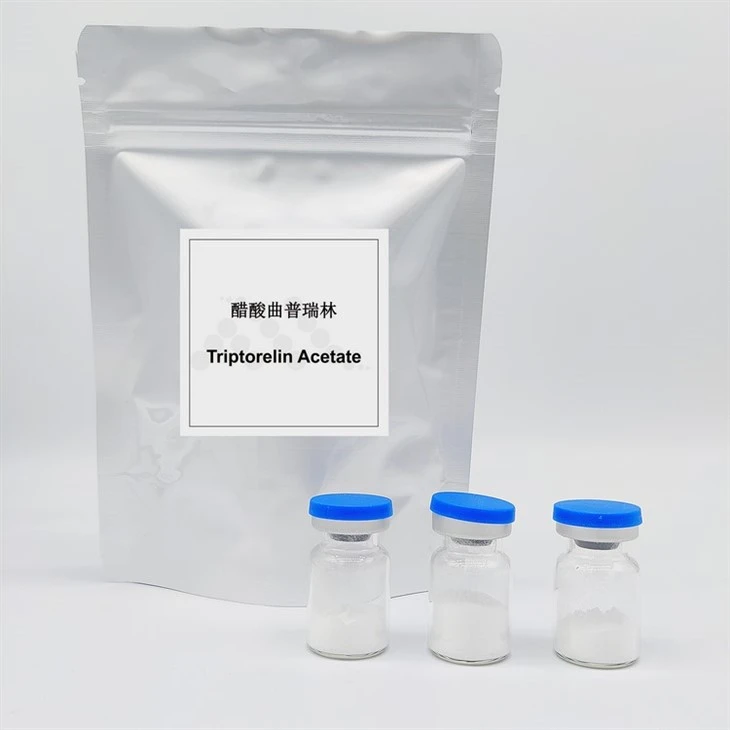
It's interesting to compare Carbetocin with other drugs in the same class or with similar functions. For example, Triptorelin Acetate for Veterinary CAS 57773 - 63 - 4 and Triptorelin Acetate are drugs mainly used in veterinary medicine. They have different mechanisms of action and pharmacokinetic profiles compared to Carbetocin. While Carbetocin acts on oxytocin receptors in the uterine myometrium, Triptorelin Acetate acts on gonadotropin - releasing hormone (GnRH) receptors.
Another related product is Peforelin. Although the details of its specific applications and pharmacokinetics may vary, understanding these related drugs can help in a broader perspective of peptide - based drugs and their behavior in the body.

Elimination of Carbetocin from the Body
Carbetocin is primarily eliminated from the body through metabolism and excretion. The liver is the main organ responsible for the metabolism of Carbetocin. Enzymes in the liver break down the drug into metabolites, which are then excreted from the body.
The kidneys play a role in the excretion of both the parent drug and its metabolites. Urine is the main route of excretion for Carbetocin and its breakdown products. In healthy individuals, most of the administered Carbetocin and its metabolites are excreted within 24 hours. However, as mentioned earlier, in patients with impaired renal or hepatic function, the elimination process may be delayed.
Conclusion
In conclusion, Carbetocin (CAS 37025 - 55 - 1) has a relatively long half - life of about 40 - 60 minutes after intravenous injection, which contributes to its long - acting effect in preventing postpartum hemorrhage. The actual time it stays in the body can be influenced by various factors such as the route of administration, patient age, body weight, and renal and hepatic function.
As a supplier of Carbetocin CAS 37025 - 55 - 1, we are committed to providing high - quality products and comprehensive information to our customers. If you are interested in purchasing Carbetocin or have any questions about its use, please feel free to contact us for further discussion and procurement negotiation.
References
- "Pharmacokinetics and Pharmacodynamics of Carbetocin in Postpartum Women". Journal of Clinical Pharmacology.
- "Oxytocin and its Analogues: A Review of Their Use in Obstetrics". International Journal of Obstetrics and Gynecology.