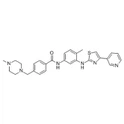
Mavacoxib, identified by its CAS number 170569-88-7, is a non-steroidal anti-inflammatory drug (NSAID) specifically designed for veterinary use. As a supplier of Mavacoxib CAS 170569-88-7, understanding how to evaluate its efficacy is crucial for both our business and the well - being of animals. In this blog, we will explore various aspects of evaluating the efficacy of Mavacoxib, from its mechanism of action to practical assessment methods.


Mechanism of Action of Mavacoxib
To understand the efficacy of Mavacoxib, it is essential to first look at how it works. Mavacoxib is a selective cyclooxygenase - 2 (COX - 2) inhibitor. Cyclooxygenases are enzymes that play a key role in the production of prostaglandins, which are lipid compounds involved in inflammation, pain, and fever. There are two main types of cyclooxygenases: COX - 1 and COX - 2. COX - 1 is constitutively expressed in many tissues and is involved in maintaining normal physiological functions such as protecting the gastric mucosa and regulating renal blood flow. COX - 2, on the other hand, is induced at sites of inflammation and injury.
By selectively inhibiting COX - 2, Mavacoxib reduces the production of prostaglandins at the inflamed sites, thereby alleviating pain, inflammation, and fever. At the same time, because it has little effect on COX - 1, it is expected to have fewer gastrointestinal side effects compared to non - selective NSAIDs. This selective action is the basis for its use in treating various inflammatory conditions in animals, such as osteoarthritis in dogs.
Clinical Indications and Target Conditions
Mavacoxib is primarily used in the treatment of pain and inflammation associated with osteoarthritis in dogs. Osteoarthritis is a common degenerative joint disease that affects a significant number of dogs, especially as they age. It is characterized by the breakdown of cartilage in the joints, leading to pain, stiffness, and reduced mobility.
In addition to osteoarthritis, Mavacoxib may also be used in other conditions where inflammation and pain management are required, such as post - operative pain. However, its use should always be based on a veterinarian's diagnosis and prescription, as the drug's efficacy and safety need to be carefully evaluated in different clinical scenarios.
Efficacy Evaluation in Pre - clinical Studies
Before Mavacoxib can be used in clinical practice, it undergoes a series of pre - clinical studies to evaluate its efficacy. These studies typically involve in vitro and in vivo experiments.
In vitro Studies
In vitro studies are conducted in a laboratory setting, usually using cell cultures. For Mavacoxib, in vitro studies may focus on its ability to inhibit COX - 2 activity. Researchers can measure the production of prostaglandins in cell cultures in the presence and absence of Mavacoxib. A significant reduction in prostaglandin production in the presence of the drug indicates its potential anti - inflammatory activity.
These studies can also help determine the optimal concentration of Mavacoxib for COX - 2 inhibition. By testing different concentrations of the drug, researchers can establish a dose - response relationship, which is important for understanding the drug's potency.
In vivo Studies
In vivo studies are carried out in animals, usually using rodent models of inflammation. For example, the carrageenan - induced paw edema model is a commonly used method to evaluate the anti - inflammatory effect of drugs. In this model, carrageenan is injected into the paw of a rodent, which causes local inflammation and swelling. Mavacoxib is then administered, and the degree of paw swelling is measured over time. A reduction in paw swelling compared to the control group indicates the drug's anti - inflammatory efficacy.
In addition to acute inflammation models, chronic inflammation models, such as adjuvant - induced arthritis in rats, can also be used to evaluate the long - term efficacy of Mavacoxib in treating arthritis - like conditions. These models can mimic the pathological changes in osteoarthritis to some extent and help assess the drug's ability to reduce pain, inflammation, and joint damage over an extended period.
Efficacy Evaluation in Clinical Trials
After pre - clinical studies, Mavacoxib undergoes clinical trials in dogs. Clinical trials are designed to evaluate the drug's safety and efficacy in real - world clinical settings.
Phase I Clinical Trials
Phase I clinical trials mainly focus on assessing the safety and pharmacokinetics of Mavacoxib in a small number of healthy dogs. Pharmacokinetic studies involve measuring the absorption, distribution, metabolism, and excretion of the drug in the body. By determining parameters such as the maximum plasma concentration (Cmax), the time to reach Cmax (Tmax), and the half - life (t1/2) of Mavacoxib, researchers can understand how the drug behaves in the dog's body and establish appropriate dosing regimens.
Phase II Clinical Trials
Phase II clinical trials are conducted in a larger number of dogs with the target condition, such as osteoarthritis. The primary goal of these trials is to evaluate the preliminary efficacy of Mavacoxib. This is usually done by comparing the treatment group (dogs receiving Mavacoxib) with a control group (dogs receiving a placebo or an existing standard treatment).
Efficacy endpoints in phase II trials may include subjective assessments by veterinarians, such as improvements in lameness, joint mobility, and pain scores. Objective measures, such as changes in joint circumference or the results of radiological examinations, may also be used. For example, a reduction in joint swelling or an improvement in the quality of joint cartilage on radiographs can indicate the drug's efficacy in treating osteoarthritis.
Phase III Clinical Trials
Phase III clinical trials are large - scale, multi - center studies that aim to confirm the efficacy and safety of Mavacoxib in a diverse population of dogs. These trials usually involve hundreds or even thousands of dogs and are designed to provide more definitive evidence of the drug's effectiveness.
The endpoints in phase III trials are similar to those in phase II trials but are more rigorously defined and measured. In addition to clinical endpoints, long - term follow - up is often included to assess the durability of the drug's effect. For example, a study may follow dogs for several months to a year to evaluate the long - term management of osteoarthritis symptoms with Mavacoxib.
Post - marketing Surveillance
Even after Mavacoxib is approved for use in the market, post - marketing surveillance is essential to continuously evaluate its efficacy. Post - marketing surveillance involves collecting data from real - world use of the drug in a large number of animals.
Veterinarians can report the outcomes of using Mavacoxib in their patients, including the effectiveness of the drug in relieving pain and inflammation, as well as any adverse events. This real - world data can provide valuable information on the drug's performance in different clinical situations and help identify any rare or long - term side effects that may not have been detected in clinical trials.
Comparison with Other Drugs
To fully evaluate the efficacy of Mavacoxib, it is also important to compare it with other drugs used for the same indications. For example, in the treatment of osteoarthritis in dogs, Mavacoxib can be compared with other NSAIDs, such as meloxicam or carprofen.
Comparative studies can assess differences in efficacy, safety, and cost - effectiveness. For instance, a study may compare the pain - relieving effect of Mavacoxib and meloxicam over a certain period. By measuring pain scores and the degree of improvement in joint function, researchers can determine which drug is more effective in treating osteoarthritis.
In addition to NSAIDs, Mavacoxib can also be compared with other types of drugs used for pain management, such as opioids or chondroprotective agents. These comparisons can help veterinarians make more informed decisions when choosing the most appropriate treatment for their patients.
Conclusion and Call to Action
Evaluating the efficacy of Mavacoxib involves a comprehensive approach, from pre - clinical studies to post - marketing surveillance. Understanding the drug's mechanism of action, clinical indications, and performance in comparison with other drugs is crucial for ensuring its safe and effective use in veterinary medicine.
As a supplier of Mavacoxib CAS 170569 - 88 - 7, we are committed to providing high - quality products that meet the strictest standards. If you are interested in purchasing Mavacoxib for veterinary use, or if you have any questions about its efficacy, please feel free to contact us for further discussion and potential procurement opportunities.
In addition to Mavacoxib, we also supply other veterinary APIs, such as API Imidacloprid, Pimobendan CAS 74150 - 27 - 9, and Neostigmine Methyl Sulfate Cholinesterase Inhibitor. Our team of experts is always ready to assist you in finding the most suitable products for your needs.
References
- Chan, W. K., & Ricciotti, E. (2018). Cyclooxygenase - 2: Regulation and role in inflammation. Biochimica et Biophysica Acta (BBA) - Molecular and Cell Biology of Lipids, 1864(10), 1437 - 1452.
- Egerbacher, M., & Leeb, T. (2017). Osteoarthritis in dogs: Pathogenesis, diagnosis, and treatment. Veterinary Journal, 224, 14 - 20.
- Flecknell, P. (2018). Laboratory Animal Anaesthesia. Academic Press.