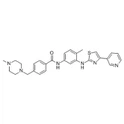
Altrenogest, identified by its CAS number 850 - 52 - 2, is a synthetic progestin widely used in veterinary medicine, particularly for estrus synchronization in swine and horses. As a trusted supplier of Altrenogest CAS 850 - 52 - 2, understanding the purity requirements of this compound is crucial for ensuring its effectiveness, safety, and compliance with regulatory standards. In this blog post, we will delve into the purity requirements for Altrenogest, exploring the factors that influence these requirements and the methods used to assess purity.
Why Purity Matters
The purity of Altrenogest is of utmost importance for several reasons. First and foremost, a high - purity product ensures the desired pharmacological effects. In veterinary applications, Altrenogest is used to control the estrous cycle, and any impurities could potentially interfere with its ability to bind to progesterone receptors and regulate hormonal balance. This could lead to inconsistent results in estrus synchronization, affecting breeding programs and overall animal productivity.
Secondly, purity is closely linked to safety. Impurities in Altrenogest may be toxic or have adverse effects on animals. For example, if there are residual solvents or heavy metals present in the product, they could accumulate in the animal's body over time, causing health problems. Moreover, in the context of food - producing animals, any contaminants in Altrenogest could pose a risk to human health through the food chain.
Finally, regulatory bodies around the world have strict requirements for the purity of veterinary drugs, including Altrenogest. Non - compliance with these purity standards can result in legal issues, product recalls, and damage to the reputation of the supplier.
Purity Requirements
The purity requirements for Altrenogest are typically defined in terms of the percentage of the active ingredient in the product. The United States Pharmacopeia (USP) and the European Pharmacopoeia (EP) are two of the most widely recognized authorities for setting quality standards for pharmaceuticals, including veterinary drugs.
According to the USP and EP monographs, the minimum purity of Altrenogest should be 98.0% on a dried basis. This means that when the product is dried to remove any moisture, at least 98.0% of the remaining substance should be Altrenogest. The remaining 2.0% may consist of impurities, which are further classified into different types, such as related substances, residual solvents, and heavy metals.
Related Substances
Related substances are chemical compounds that are structurally similar to Altrenogest and may be present as by - products of the manufacturing process or as degradation products. The USP and EP have specific limits for related substances in Altrenogest. For example, the total amount of related substances should not exceed 2.0%, and the amount of any individual related substance should not exceed 0.5%.


Residual Solvents
During the synthesis of Altrenogest, various solvents are used, and it is essential to ensure that the residual solvent levels in the final product are within acceptable limits. The International Council for Harmonisation of Technical Requirements for Pharmaceuticals for Human Use (ICH) has classified solvents into different classes based on their toxicity. For Altrenogest, the levels of Class 1 solvents (known human carcinogens) should be below the limit of detection, and the levels of Class 2 solvents (non - genotoxic animal carcinogens or possible causative agents of other irreversible toxicity) should be within the specified limits.
Heavy Metals
Heavy metals, such as lead, mercury, cadmium, and arsenic, can be present in Altrenogest as contaminants from raw materials or the manufacturing process. These metals are toxic even at low concentrations, and their levels in Altrenogest should be carefully controlled. The USP and EP have limits for heavy metals, typically expressed as parts per million (ppm). For example, the limit for lead in Altrenogest is usually set at 10 ppm.
Methods for Assessing Purity
To ensure that Altrenogest meets the purity requirements, several analytical methods are used.
High - Performance Liquid Chromatography (HPLC)
HPLC is one of the most commonly used methods for analyzing the purity of Altrenogest. It can separate Altrenogest from its related substances based on their different affinities for the stationary phase in the chromatographic column. By comparing the peak areas of Altrenogest and its related substances, the percentage of each component in the sample can be determined. HPLC is a highly sensitive and accurate method, capable of detecting impurities at very low levels.
Gas Chromatography (GC)
GC is used primarily for the analysis of residual solvents in Altrenogest. It separates volatile compounds based on their boiling points and affinities for the stationary phase. By injecting a sample of Altrenogest into the GC system, the residual solvents can be vaporized and separated, and their concentrations can be determined by comparing the peak areas with those of known standards.
Atomic Absorption Spectroscopy (AAS) or Inductively Coupled Plasma - Mass Spectrometry (ICP - MS)
These methods are used to measure the levels of heavy metals in Altrenogest. AAS measures the absorption of light by atoms of the heavy metals at specific wavelengths, while ICP - MS ionizes the sample and measures the mass - to - charge ratio of the ions. Both methods are highly sensitive and can detect heavy metals at trace levels.
Our Commitment to Purity
As a supplier of Altrenogest CAS 850 - 52 - 2, we are committed to providing products that meet the highest purity standards. We have a state - of - the - art manufacturing facility equipped with advanced analytical instruments to ensure that every batch of Altrenogest is thoroughly tested for purity. Our quality control team follows strict standard operating procedures (SOPs) based on the guidelines of the USP, EP, and other relevant regulatory bodies.
In addition to Altrenogest, we also offer other high - quality veterinary APIs, such as API Dexmedetomidine Hydrochloride CAS 145108 - 58 - 3 and API Trilostane Pharmaceutical Powder (Trilostane API). These products also undergo rigorous quality control to ensure their purity and effectiveness.
Contact Us for Purchase
If you are interested in purchasing high - purity Altrenogest or any of our other veterinary APIs, we invite you to contact us for further information and to discuss your specific requirements. Our team of experts is ready to assist you in finding the right products for your needs. We offer competitive prices, reliable delivery, and excellent customer service. Whether you are a large - scale animal breeding operation or a small - scale veterinary clinic, we can provide you with the products you need to ensure the health and productivity of your animals.
References
- United States Pharmacopeia (USP) - National Formulary (NF). Altrenogest monograph.
- European Pharmacopoeia (EP). Altrenogest monograph.
- International Council for Harmonisation of Technical Requirements for Pharmaceuticals for Human Use (ICH). Q3C(R6) Impurities: Guidelines for Residual Solvents.
- Pharmaceutical Analysis textbooks (e.g., Textbook of Pharmaceutical Analysis by S. W. R. G. H. A. W. S. R. G. H. A. W. et al.)