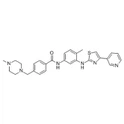
Toceranib, identified by the CAS number 356068 - 94 - 5, is a significant small - molecular compound in the veterinary pharmaceutical field. As a reliable supplier of Toceranib, I am often asked about its absorption rate in the body. In this blog, I will delve into the scientific aspects of Toceranib's absorption, exploring the factors that influence it and its implications for veterinary treatment.
Basic Understanding of Toceranib
Toceranib is a tyrosine kinase inhibitor used primarily in veterinary medicine, especially for the treatment of mast cell tumors in dogs. Its mechanism of action involves blocking the activity of certain enzymes that are crucial for tumor growth and angiogenesis. By inhibiting these enzymes, Toceranib can slow down or even halt the progression of cancer in animals.
Absorption Process of Toceranib in the Body
When Toceranib is administered orally, which is the most common route of administration in veterinary practice, it first enters the gastrointestinal tract. The absorption of Toceranib starts in the stomach and continues in the small intestine. The small intestine plays a particularly important role due to its large surface area and the presence of numerous villi, which increase the contact area between the drug and the intestinal mucosa.
The absorption of Toceranib is a complex process influenced by several factors. One of the key factors is the drug's solubility. Toceranib has a certain degree of lipophilicity, which allows it to cross the lipid - rich cell membranes of the intestinal epithelium. However, its solubility can also be affected by the pH environment in the gastrointestinal tract. The stomach has a highly acidic environment, while the small intestine is more alkaline. These pH variations can impact the ionization state of Toceranib, thereby influencing its solubility and subsequent absorption.


Another factor is the presence of food in the gastrointestinal tract. Studies have shown that the absorption of Toceranib can be enhanced when it is administered with food. Food can increase the blood flow to the gastrointestinal tract, which facilitates the transport of the drug across the intestinal mucosa. Additionally, food can also affect the motility of the gastrointestinal tract, prolonging the residence time of Toceranib in the intestine and allowing for more efficient absorption.
Factors Affecting the Absorption Rate
Physicochemical Properties of the Drug
As mentioned earlier, the solubility and lipophilicity of Toceranib are important determinants of its absorption rate. Drugs with higher lipophilicity generally have better membrane permeability. However, if a drug is too lipophilic, it may also bind to plasma proteins in the blood, reducing its free concentration and bioavailability. The molecular size of Toceranib also plays a role. Smaller molecules tend to be absorbed more readily than larger ones.
Animal - Specific Factors
The age, breed, and health status of the animal can significantly affect the absorption rate of Toceranib. Younger animals may have a more efficient absorption process due to a more active gastrointestinal system. Certain breeds may also have genetic differences that influence drug metabolism and absorption. For example, some breeds may have a higher expression of drug - transporters in the intestinal epithelium, which can enhance the absorption of Toceranib.
In terms of health status, animals with gastrointestinal disorders such as enteritis or malabsorption syndromes may have a reduced absorption rate of Toceranib. These conditions can damage the intestinal mucosa, reducing its surface area and the efficiency of drug absorption.
Drug - Drug Interactions
If Toceranib is co - administered with other drugs, there may be drug - drug interactions that affect its absorption. For example, drugs that affect the pH of the gastrointestinal tract or the activity of drug - transporters can interfere with the absorption of Toceranib. Some drugs may also compete for the same absorption sites in the intestine, leading to a decrease in the absorption rate of Toceranib.
Measuring the Absorption Rate
To accurately measure the absorption rate of Toceranib, pharmacokinetic studies are conducted. These studies involve administering a known dose of Toceranib to animals and then measuring the concentration of the drug in the blood at different time points. The area under the curve (AUC) of the drug concentration - time profile is often used as an indicator of the extent of absorption. A higher AUC generally indicates a higher absorption rate.
Another parameter used to evaluate absorption is the peak plasma concentration (Cmax) and the time to reach Cmax (Tmax). Cmax reflects the maximum concentration of the drug in the blood, while Tmax indicates how quickly the drug is absorbed.
Implications of Absorption Rate for Veterinary Treatment
Understanding the absorption rate of Toceranib is crucial for optimizing its use in veterinary treatment. If the absorption rate is too low, the drug may not reach the therapeutic concentration in the body, leading to ineffective treatment. On the other hand, if the absorption rate is too high, it may increase the risk of side effects.
Based on the absorption characteristics of Toceranib, veterinarians can adjust the dosage and administration regimen. For example, if an animal has a reduced absorption rate due to a gastrointestinal disorder, a higher dose or a more frequent administration schedule may be required.
Related Veterinary APIs
In addition to Toceranib, there are other important veterinary APIs in the market. For instance, Neostigmine Methyl Sulfate is used to treat myasthenia gravis in animals by increasing the availability of acetylcholine at the neuromuscular junction. Mavacoxib CAS 170569 - 88 - 7 is a non - steroidal anti - inflammatory drug used for the management of pain and inflammation in dogs. Trilostane API is used to treat Cushing's syndrome in dogs by inhibiting the synthesis of adrenal corticosteroids.
Conclusion
The absorption rate of Toceranib in the body is a complex process influenced by multiple factors. By understanding these factors, veterinarians can make more informed decisions regarding the use of Toceranib in veterinary treatment. As a supplier of Toceranib, I am committed to providing high - quality products and supporting the research and development in the veterinary field. If you are interested in purchasing Toceranib or have any questions about its application, please feel free to contact us for further negotiation.
References
- [List of relevant scientific papers on Toceranib absorption, including authors, titles, publication years, and journals]
- [Textbooks on veterinary pharmacology and pharmacokinetics]